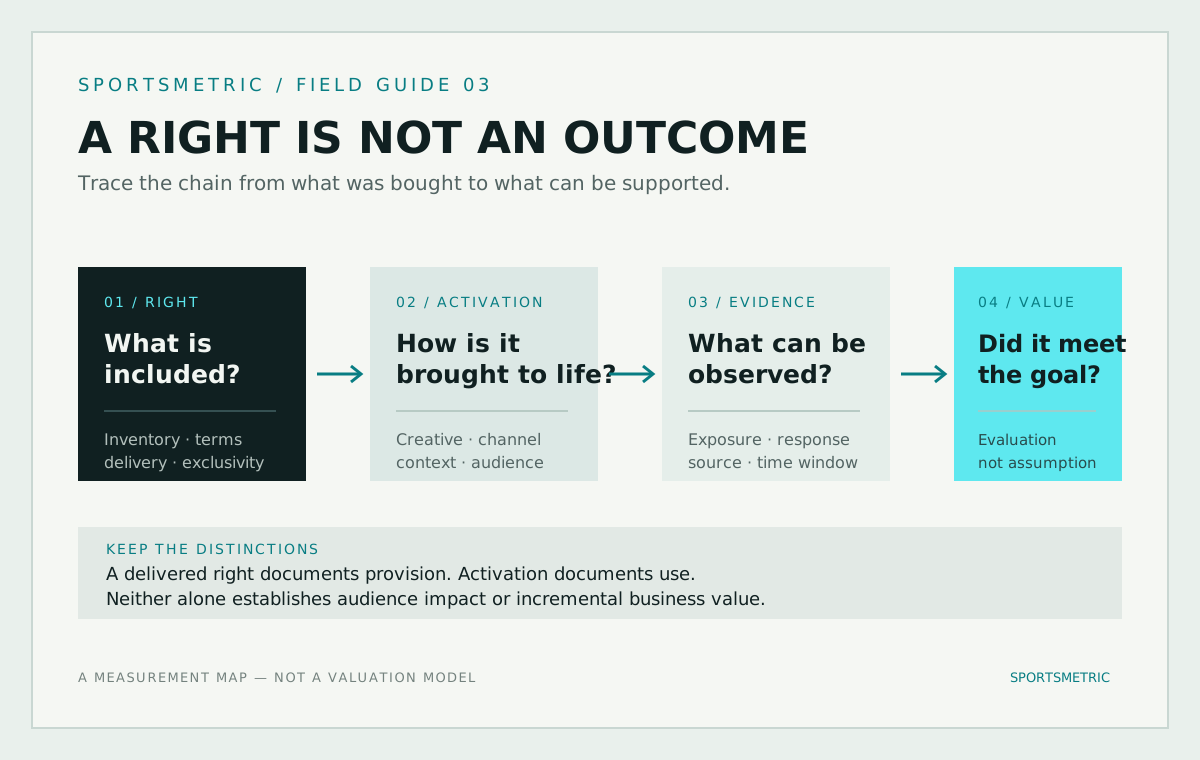
Rights, activation and results are three different things
A rights agreement can create permission to associate with a property. An activation translates that permission into something people can encounter or participate in. The resulting awareness, response or commercial benefit must then be evaluated. A partner announcement does not establish all three.
The IOC’s description of exclusive TOP marketing rights illustrates the rights layer. It does not mean every permitted action has been delivered, every fan has seen it or every partner has achieved a measurable return.
A documented product-and-storytelling example
Nike’s August 25, 2025 Caitlin Clark announcement combined a signature-athlete announcement with a logo reveal and planned apparel availability. It described Clark’s participation in the creative process and the product story behind the logo.
A researcher can code the components named in that source: athlete association, creative reveal, product narrative and planned distribution. The source does not independently verify campaign reach, completed sales or incremental demand. Announced future availability must remain an announcement unless a later source confirms delivery.
What should an activation brief contain?
Start with a specific audience need and the rights available to address it. A helpful concept should explain why participation is credible for this brand, not simply where a logo will appear. Align content permissions, market, dates and measurement responsibilities before launch.
- Name the audience and intended change.
- Confirm the rights and approvals needed.
- Describe the actual fan experience or content.
- Record delivery channels and dates.
- Choose evidence that matches the objective.
- Identify who will supply missing business-outcome data.
How do you assess activation without overstating results?
Separate delivery evidence from audience response and outcomes. AMEC’s evaluation taxonomy is useful here: a published video, recorded interactions and a change in preference are different measures. High post engagement can justify investigating a creative idea; it is not proof that the sponsorship paid for itself.
Sportsmetric can help researchers inspect available content and audience context. Private campaign costs, rights terms and customer outcomes still need to come from the relevant parties.