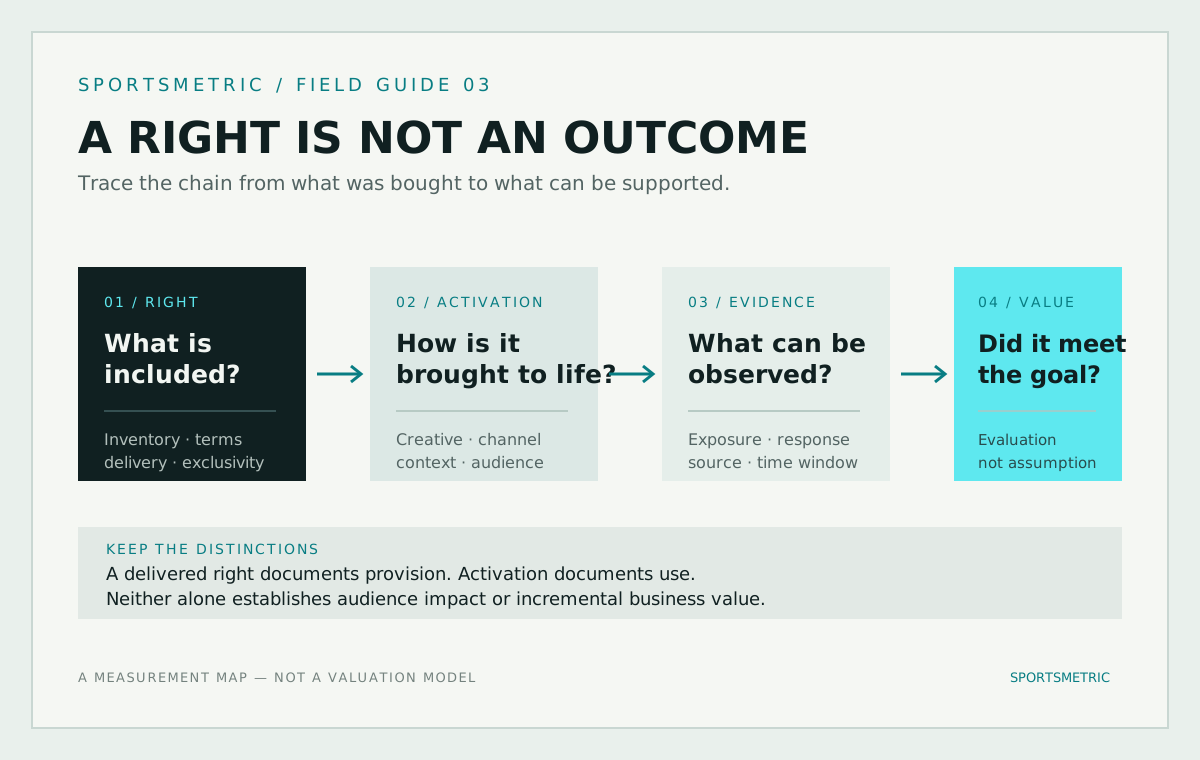
What does a sponsor receive?
Rights can concern association, use of marks, content participation, experiences or other agreed benefits. The exact package is contract-specific. The IOC describes its TOP programme as granting exclusive global marketing rights to a select group of partners; that is a programme description, not a template for every sports deal.
Keep property-level and athlete-level relationships separate. A league sponsor is not necessarily a personal sponsor of every player, and a player’s relationship does not establish a team agreement. Exclusivity and category conflicts must be verified rather than inferred.
What evidence supports a sponsorship claim?
Start with a primary announcement, an official partner directory or another document that actually states the relationship. Record the publication date, who made the statement and what it says. Older announcements should not silently become claims that a contract is active today.
Nike’s August 2025 Caitlin Clark announcement is a strong example of a dated primary source: it names the athlete, describes an expanded partnership and explains the signature logo. It does not disclose enough to calculate contract value or return.
- Verify the exact brand and sports entity.
- Find a primary statement of the relationship.
- Separate announcement date from contract dates.
- Distinguish product news from contractual terms.
- Keep social tags and observed posts as a separate evidence tier.
How is sponsorship different from advertising?
Sponsorship acquires an association or set of rights. Advertising pays to distribute a message through media inventory. A campaign can use both: an agreed athlete relationship might be supported by separately purchased advertising. Do not assume either the rights fee or the media budget is known from public social activity.
How can a marketer use public evidence?
Public records can help map announced relationships, identify examples and prepare questions for outreach. Social posts can demonstrate that content appeared, with the platform’s recorded interactions where available. Neither provides a complete contract register.
Use a documented tracker as a starting point, not as legal clearance or proof that an athlete is available for a particular category. For commercial decisions, verify rights and status directly with the appropriate representatives.