Marketing sport versus marketing through sport
A club encouraging fans to join a membership programme is marketing a sports offering. A consumer brand working with an athlete is marketing through sport. Both need a clear audience, a relevant proposition and a way to evaluate the result, but they do not necessarily share the same commercial objective.
The International Olympic Committee’s TOP programme illustrates marketing through sport: it describes a defined sponsorship programme granting exclusive global marketing rights. Those rights are a route to participation, not evidence that a particular campaign has succeeded.
A real example: an athlete and a product story
Nike’s August 25, 2025 announcement introduced Caitlin Clark as a signature athlete and unveiled her logo. It described apparel plans and her participation in the creative process. This is a documented example of product development, athlete storytelling and brand partnership working together.
The announcement supports what Nike said at that time. It does not establish sales generated by the announcement, the value of the contract or whether every announced product subsequently launched. Those are different questions requiring additional evidence.
Start with the decision, not the biggest account
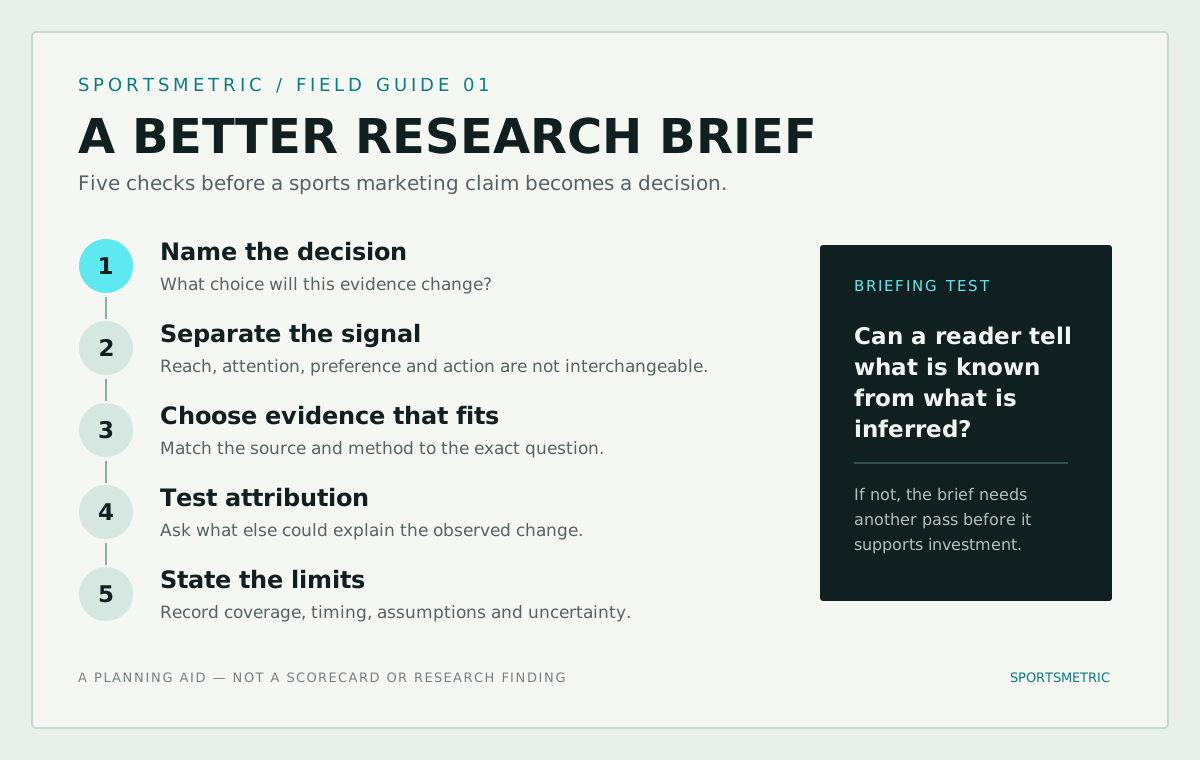
A practical research brief should explain who the brand wants to reach and why a sports context is relevant. Follower count can help establish audience scale, but it cannot establish customer fit, purchase intent or the number of unique people across platforms.
- Write the audience and business question in one sentence.
- Check the exact athlete, team or creator identity.
- Collect dated content examples and primary announcements.
- Compare like-for-like metrics and observation periods.
- Separate what is observed from what still needs testing.
How should sports marketing be measured?
AMEC’s evaluation taxonomy distinguishes communication outputs, audience responses, outcomes and impact. Apply that distinction to sport: a post is an activity, engagement is a response and a change in brand preference or incremental sales requires its own measurement. Do not substitute one level for another.
Sportsmetric can support audience and activity research where coverage exists. It is not a substitute for a rights contract, campaign delivery log, customer database or controlled brand-lift study.