Audience size is context, not unique reach
An Instagram follower count describes an account at an observation date. It does not tell you how many followers saw a campaign, whether those followers are customers or how much audience overlaps with another account. Adding athlete, team and league followers does not create a deduplicated fan total.
Use growth percentages alongside absolute change and a starting count. Small denominators can create dramatic percentages without a large audience change. Compare the same platform and period, and disclose gaps instead of interpolating measurements into facts.
Engagement needs a denominator and a definition
Likes, comments and views are not interchangeable. A rate should identify which interactions are counted, the denominator and the sample of posts. A follower-based engagement rate is not the same as a rate based on impressions or views.
The most-liked post and the most-viewed post may be different. Preserve those distinctions, and inspect actual content before deciding why a response matters. High interaction does not establish positive sentiment, brand affinity or purchase intent.
Outcome and impact measures require more evidence
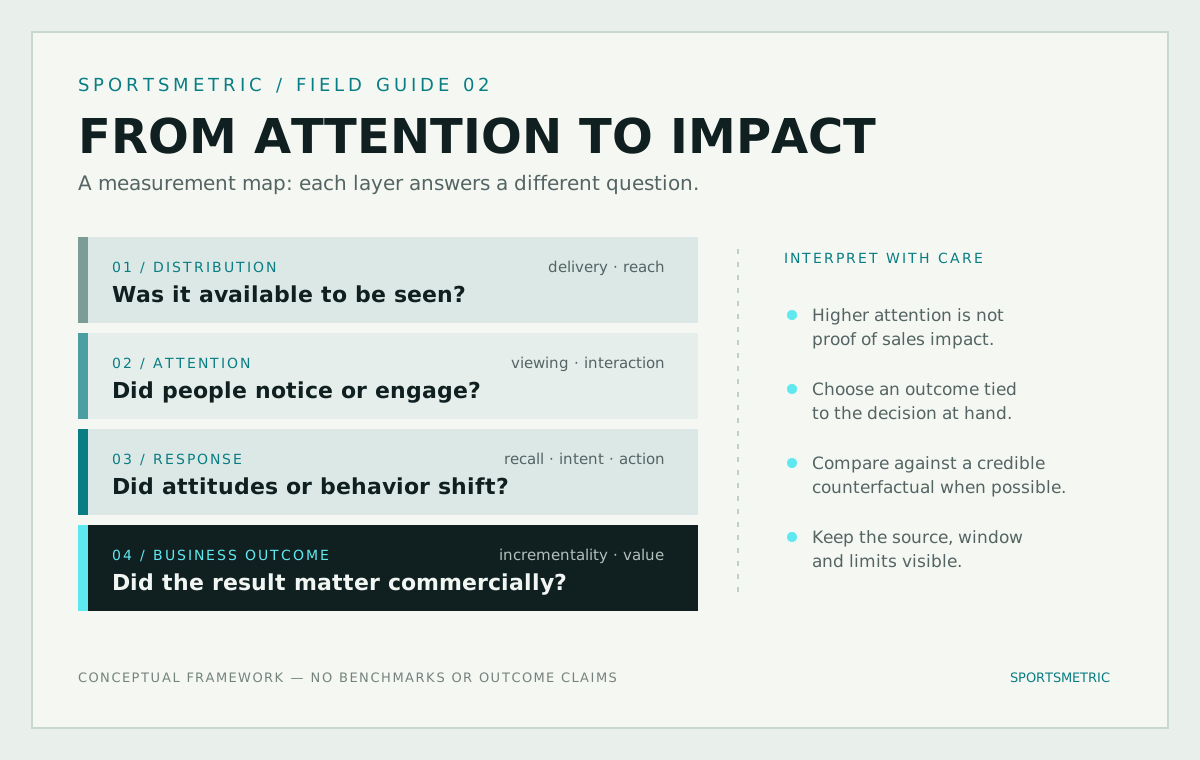
AMEC’s taxonomy warns against using a metric at one evaluation level to demonstrate an outcome at another. Brand awareness or preference generally needs suitable audience research; incremental sales requires business data and a defensible method for estimating what would otherwise have happened.
Google’s Conversion Lift documentation provides a concrete advertising example: it compares a treatment group with a group held back from ads. A social follower timeline alone does not supply that comparison and should not be described as a lift study.
- State the business question first.
- Name the platform, sample, date and denominator.
- Keep observed, modeled and unavailable values distinct.
- Separate attention indicators from business outcomes.
- Identify what additional data would test the hypothesis.
What belongs in a decision brief?
Include a small set of relevant indicators, dated examples and limitations. A concise brief might show account growth, the content behind it and a list of other events in the same period, then recommend a next investigation. It should not fill unavailable sales, sentiment or demographic fields with estimates presented as observations.